A workshop built on a lifelong love of architecture.
Atelier Begüm began long before it had a name. It began in a child's bedroom, with pillows arranged into a tent and a bedsheet pulled overhead, and a little girl deciding — carefully, seriously — where each cushion belonged.
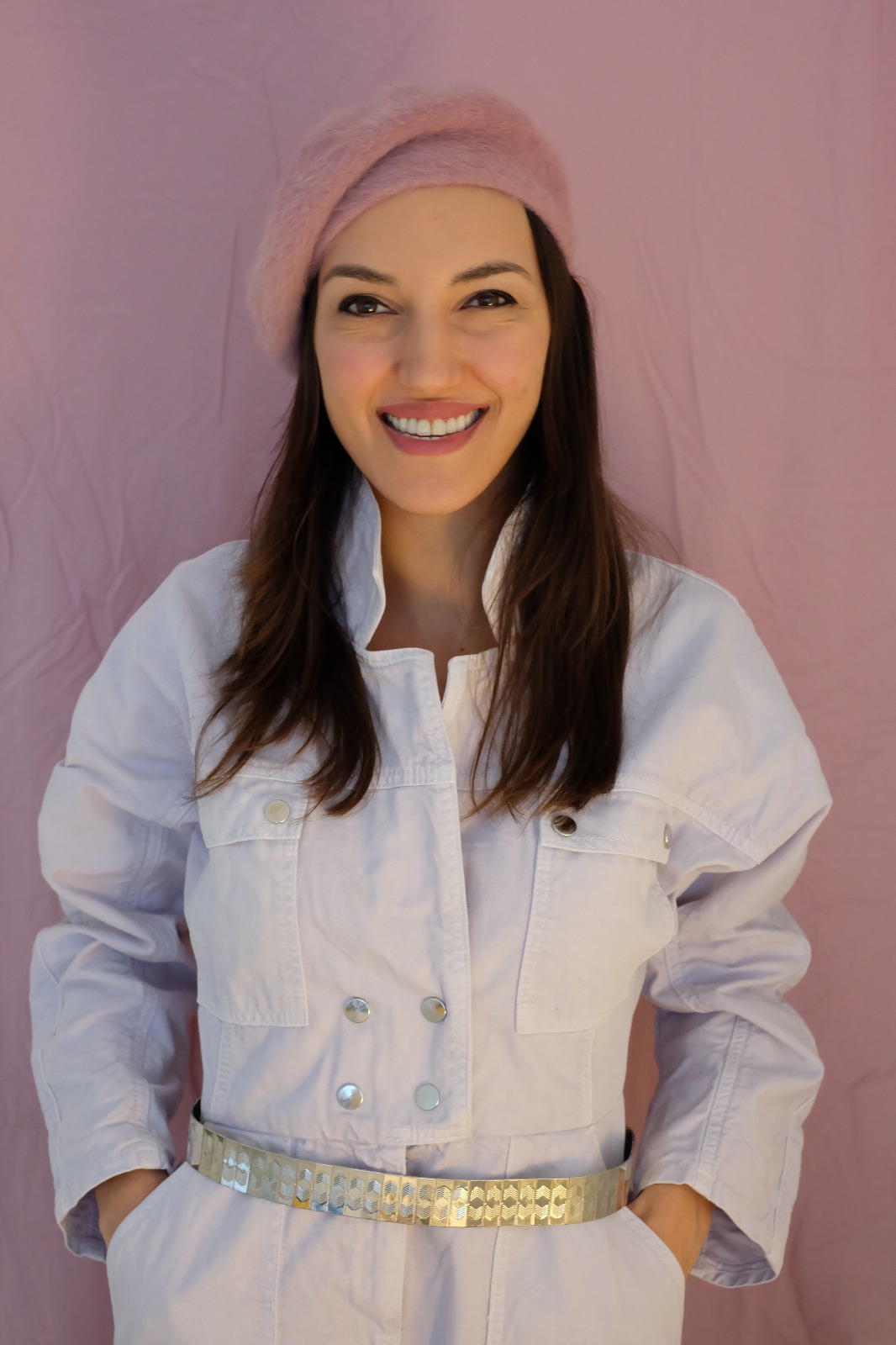
I was five years old the first time I made architecture. I didn't know that word for it yet. I only knew that pillows could become walls, that a bedsheet could become a roof, and that a small dark space underneath could be made — with care — into somewhere worth living in.
I decorated that little fort with whatever I could carry into it. A blanket folded a certain way. A flashlight at a particular angle. The placement mattered. I remember sitting inside, looking around, deciding what felt right and what didn't. I didn't have the vocabulary for proportion or atmosphere. I just had the feeling — and the feeling was enough.
Soon I started drawing apartments on paper. Imaginary ones. I would draw the outline first, then divide it into rooms, then place the furniture. I chose every position based on how it made me feel. The couch facing the window because that was kind. The bed against the wall furthest from the door because that was safe. I was making homes for people who didn't exist, and I was already designing for how a space would feel rather than how it would look.
When I played with my three best friends — Seçil, Esma, and Elif — we each had a role we'd invented for ourselves. I was the architect. We made little identity cards out of folded paper, each of us pasting our photograph onto the card and writing what we did for a living. On mine, in careful handwriting, I had written one word: architect.
I was seven. I hadn't even built anything real yet. But I had named myself.
Around the same time, my father was renovating our family home in the countryside. He worked with a real architect, and the architect drew everything by hand. This was before computers had taken over the discipline. The plans came home rolled into long tubes that lived in a drawer in my father's study.
I would wait until no one was watching, then open the drawer and unroll the plans across the floor. I remember the smell of that paper — the dry, slightly sharp scent of architectural drafting paper that I have never quite encountered anywhere else since. I remember the weight of the rolls in my hands. I remember tracing the lines with my finger, following the path from kitchen to hallway to bedroom, learning a language I didn't yet know was a language.
I would put the plans back exactly as I had found them, and walk out of the room as if nothing had happened. But something had happened. Something kept happening, every time, for years.
In the city, the family upstairs had a daughter who was studying interior design. My mother would go up to visit, and I would tag along — but instead of sitting in the living room with the adults, I'd slip into the daughter's room and watch her work. She had a real drafting board. Real pencils. Real sample boards with fabric and stone and wood. She was twelve years older than me, and to my eyes she was already the person I wanted to be.
I'd go home and copy her drawings on my own paper. Trace the way she laid out a room. Mimic her handwriting on the labels. Sometimes I'd go upstairs alone — no mother, no excuse — just to sit quietly in her doorway and watch her think.
Children do this when they find something true. They don't know yet that they've found it. They just keep going back.
At ten, there was a Turkish television show — Ayrılsak da Beraberiz — that I watched religiously for one reason and one reason only: the main character was an architect. I would sit in front of the screen waiting for the scenes set in her office. I wanted to see what she did with her hands. How she stood at her desk. What it looked like when she began a new project.
I was not watching a story. I was studying a future.
Years later, I went to Italy and studied architecture at the Politecnico di Milano — one of the great architecture schools in the world. I took two undergraduate degrees in design and architecture. I learned the discipline I had been imitating since I was old enough to hold a pencil.
I did not become a working architect. I did not draft buildings for clients or stamp permits or rise through a firm. Life took me somewhere else — toward a different kind of practice, broader and more personal: making, drawing, designing across many things, living between languages and countries, becoming an artist in a wider sense than the word usually implies.
And then I noticed something. I noticed it especially when I watched my own child reach for cardboard and tape, and disappear into a small concentrated quiet that I recognized from somewhere. I had been that child. So had my friends. So had my neighbor's daughter, once. There is a moment in every imaginative child's life when the world becomes something they can shape — and a hand that helps them at that moment can change the entire direction of who they become.
Atelier Begüm exists because I cannot stop thinking about that five-year-old in her pillow tent.
Not because she was extraordinary. She wasn't. She was a regular child who happened to find something to love. What was rare was not the child but the conditions — the patient adults, the rolls of plans she was allowed to unroll, the friends who let her be the architect, the neighbor who didn't shoo her out of the room. Imagination is common in children. What's uncommon is the room we make for it.
That is what this studio is. A room.
For ninety minutes on a Sunday morning, your child will be the architect. They will design a treehouse with secret rooms, or a village for explorers, or a hotel for a panda. They will make small careful decisions about where things go and why. They will hold something in their hands at the end and know that it came out of their head.
Most of them will not become architects. That is not the point. The point is that creativity — the kind that lets a person navigate an uncertain world, see possibilities others miss, build something from very little — is a muscle. It is built in childhood, and the conditions for building it are surprisingly simple. A table. Some materials. An adult who takes the work seriously. Enough quiet to think.
A small room on the Plateau.
Workshops are currently hosted at Local Familial, a warm community space on the Plateau-Mont-Royal, where I rent a room for these activities. Full venue details are shared with every confirmed booking. The location may evolve over time as the studio grows, and I'll keep families informed if anything changes.
Not a curriculum. A way of being with children.
A trained eye
Years of studying architecture at one of the world's top schools taught me to see space — light, proportion, atmosphere. I bring that eye to a child's table.
Four languages
I speak English, French, Italian, and Turkish. Children can drift between languages at the table; I'll meet them wherever they're comfortable.
An artist's discipline
I work in many mediums — drawing, design, making by hand. I bring that practice into the room. Children rise to meet real attention.
Five quiet convictions that shape every Sunday.
Children are real makers, not little ones.
I don't dumb things down. I explain proportion, structure, and design choices in language they understand — and they rise to it. Always.
Constraint, not chaos.
Every workshop has a brief — a treehouse, a tiny home, a pavilion. Open prompts with clear frames produce better work than unstructured freedom.
Process over polish.
We celebrate the thinking, the trying, the changing-your-mind. The finished piece is the smallest part of what happens at the table.
Small groups. Real attention.
Eight children maximum, often fewer. Every child gets real feedback, time at my side, and the sense of being properly seen.
Screen-free, always.
No tablets, no projected videos, no digital crutches. Just hands on real things, in a quiet room, for the length of a workshop.